


The door opens with a tap of a card. A customer reaches in, pulls out a bottle of cold brew, closes the door, and walks away. No scanning. No checkout line. No waiting. Thirty seconds later, a receipt pings their phone. Meanwhile, across town, the operator checks a dashboard on their laptop and sees that the unit needs restocking in two hours the system already calculated it based on today's traffic patterns.
This is the grab-and-go model that AI smart vending fridges are built to deliver, and it's reshaping what unattended retail can look like in 2026. Whether you're evaluating the technology for an office lobby, a hotel corridor, or a hospital cafeteria, understanding how these machines actually function step by step will help you cut through the marketing language and make a grounded decision.
The Fridge's editorial research found that most confusion around AI smart vending comes from mixing up the physical hardware, the detection technology, and the software layer that ties everything together. This piece untangles all three.
Define What an AI Smart Fridge Actually Is
Before diving into the mechanics, it's worth pinning down the terminology. An AI smart vending fridge also called a smart cooler, grab-and-go cooler, or intelligent vending cabinet is a compact, refrigerated unit that customers open with a card or mobile app, take items from shelves, close the door, and leave. The system identifies what was taken and processes payment automatically in the background.
The key difference from a traditional vending machine is the open-shelf format. Customers interact with visible, touchable products more than selecting from a spiral dispenser. According to Silkron's smart fridge overview, this design allows consumers to "look and feel the physical item(s) before deciding to make a purchase" a tactile experience that traditional vending cannot replicate.
AI adds an on-device detection layer to this process. more than relying solely on weight changes or barcode scans, the system uses computer vision or sensor fusion to recognize products in real time. The result is a checkout-free flow that works for a wider range of product shapes and packaging.
Choose Your Detection Technology
Not all AI smart fridges work the same way. The detection layer is where most of the meaningful variation lives, and selecting the right approach depends on your product mix, budget, and operational tolerance for complexity.
Weight Sensor Systems
The most cost-effective detection method uses precision scales under each shelf section. When a customer removes an item, the system detects the weight change and matches it against the expected product profile. Neuroshop's technical documentation notes that weight-based systems handle variable weights recognizing items even when the same SKU fluctuates roughly ±30% from expected weight due to packaging differences or temperature condensation.
The InnoCooler system from Conexify uses weight sensor technology with a reported shrink rate below 0.1%, achieved through dual bending beam sensors. This approach works well for straightforward assortments drinks, pre-packaged meals, dairy products where items have consistent weight profiles.
Weight systems are relatively simple to operate: no tags to apply, no cameras to train. They react immediately to customer actions and can alert users in real time if something goes wrong, such as an item being returned incorrectly.
RFID Tag Systems
RFID-based detection requires every product to carry a UHF tag that the fridge reader detects. This approach delivers true item-level stock tracking, making it ideal for operators who need precise counts, expiration date monitoring, and per-item traceability.
Neuroshop's materials note that RFID supports large assortments where "each item can be a separate SKU" useful for mixed product environments. However, tags add a per-item cost, and the scanning process takes approximately 40 seconds after the door closes before the system confirms the transaction.
Neural Vision (AI Camera) Systems
The most sophisticated detection method uses cameras mounted inside the fridge typically on the ceiling and door to capture product movements in real time. When the door closes, the AI model analyzes the footage frame by frame, comparing the before and after shelf state to identify exactly which products were taken.
SmartFridgeVending.com's technology guide explains that vision-based systems require no product labeling, which means operators can restock from any supplier and change their assortment without extra prep work. Once a product catalog is trained, deploying to additional units is straightforward a significant advantage for operators managing 20+ fridges across multiple sites.
One practical consideration: most commercial vision systems process the transaction after door-close more than live, which means payment triggers 3-8 seconds after the customer walks away. This delay is intentional it gives the AI time to analyze the full interaction sequence accurately more than making real-time guesses.
Set Up the Hardware and Software
Once you've selected your detection technology, the implementation follows a consistent pattern across most vendors.
Step 1: Configure the Unit's Physical Setup
The fridge arrives as a plug-and-play unit. Most models require standard 110V or 220V power and a Wi-Fi connection. According to VMFS USA's product specifications, their AI Smart Fridge Vending Machine includes white-glove delivery and arrives ready to install operators position the unit, connect power, and configure the network.
Placement matters more than traditional vending because vision-based systems need consistent, adequate lighting to function accurately. Silkron's documentation notes that smart fridges can "maintain round-the-clock readiness to serve any customers at the appropriate locations regardless of whatever circumstances, come rain or shine" but this assumes the unit is installed in a climate-controlled interior environment with stable lighting.
Step 2: Connect to the Management Platform
Every AI smart fridge comes with cloud-based management software that handles inventory tracking, sales data, and remote monitoring. The InnoCooler system from Conexify provides real-time access to sales and inventory data through its cloud service, with constant connectivity to track unit status and temperature readings.
Silkron's Vendron platform allows operators to monitor remaining inventories, receive replenishment alerts, and access gathered data for analysis. This remote visibility is one of the core value propositions of AI smart fridges over traditional vending you know what's in the machine without physically checking it.
Step 3: Configure Payment and Access
Customers access the fridge through a mobile app or contactless card. The InnoCooler supports credit and debit cards, mobile wallets, and company ID cards through Zucchetti Paycult 2.0 integration. Neuroshop's solution supports Apple Pay and Google Pay via POS integration, along with loyalty programs, digital receipts, and promotional offers in the app.
The access flow is consistent: open the door using the app or card, take products, close the door. Payment processes automatically. For environments requiring age verification such as locations selling alcohol some models include built-in age verification hardware.
Load Products and Train the System
For weight-based systems, loading is straightforward: stock the shelves according to the planogram configuration you've defined in the software. The system maps expected weights to each shelf position.
For vision-based systems, the initial setup requires product catalog training. SmartFridgeVending.com describes the process: operators show the new product on video, and the system "generates a synthetic dataset and trains overnight." This means you can add new SKUs without hardware modifications the AI learns to recognize the product visually.
Neuroshop's hybrid approach allows operators to deploy different detection methods across their network, choosing per-unit what works best for that location's product mix.
Monitor Performance and Adjust in Real Time
One of the immediate benefits of AI smart fridges over traditional vending is the operational data you receive. Every transaction generates inventory updates, temperature logs, and customer behavior data.
According to Neuroshop's operator tools documentation, systems include live inventory views, planogram tracking, automated price updates, and remote health monitoring. If the fridge's internal temperature drifts outside acceptable ranges, the system alerts the operator immediately enabling proactive maintenance more than reactive response.
Silkron's Vendron platform emphasizes inventory management as a core feature: operators receive alerts when stock runs low and can coordinate restocking routes efficiently based on real demand patterns.
Avoid Common Implementation Mistakes
Based on documented operational challenges in the technology literature, several pitfalls recur when operators deploy AI smart fridges for the first time.
Skipping Lighting Assessment at Placement
Vision-based systems are sensitive to lighting conditions. Units placed near windows with fluctuating natural light, or in dim corridors with inconsistent artificial lighting, may experience detection errors. Before committing to a location, assess whether the ambient light is stable throughout operating hours.
Underestimating Product Catalog Maintenance
Vision systems require ongoing catalog updates when product packaging changes. If a supplier redesigns a label, the AI model may temporarily misidentify the product until retrained. Weight-based systems are more forgiving here they respond to mass changes more than visual patterns.
Ignoring Network Connectivity Requirements
AI smart fridges depend on cloud connectivity for payment processing, inventory sync, and remote monitoring. Units installed in basements, remote corners of campuses, or areas with unreliable internet may experience service interruptions. Verify network stability before deployment.
Failing to Train Staff on the Open-Shelf Flow
Traditional vending requires customers to select products from an interface. AI smart fridges require customers to understand the open-shelf, self-serve model. Clear signage explaining the open-take-close flow reduces confusion and prevents awkward interactions where customers close the door expecting a transaction confirmation screen.
Understand the Cost Structure
Pricing for AI smart vending fridges varies by unit type, detection method, and capacity.
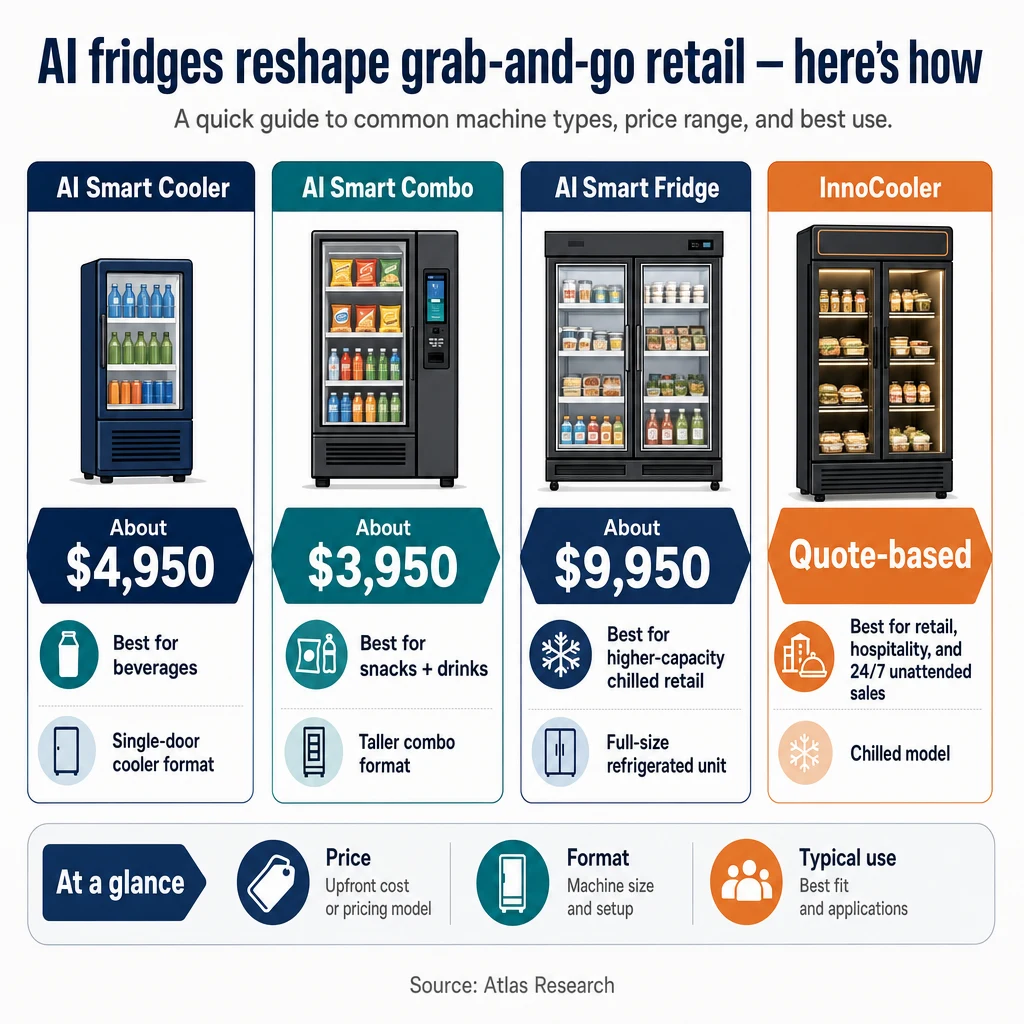
| Model Type | Approximate Price Range | Typical Use Case |
|---|---|---|
| AI Smart Cooler Vending Machine | $4,950 | Beverages, single-door cooler format |
| AI Smart Combo Vending Machine | $3,950 | Mixed snacks and drinks, taller format |
| AI Smart Fridge Vending Machine | $9,950 | Full-size refrigerated unit, higher capacity |
| InnoCooler (Chilled model) | Quote-based | Retail, hospitality, 24/7 unattended |
These figures, drawn from VMFS USA's product listings, represent base unit costs. Additional expenses may include installation, connectivity setup, ongoing software subscriptions, and RFID tag costs if using tag-based detection.
What this means for The Fridge readers: the upfront investment is higher than a traditional vending machine, but the operational savings reduced labor for restocking, lower shrinkage from accurate tracking, and higher sales from the friction-free checkout can offset the initial cost over time. Evaluate your specific location traffic and product margins before assuming the economics work or don't.
See Where AI Smart Fridges Are Already Operating
The technology has moved past pilot stage. AI smart fridges are deployed across office buildings, hotels, hospitals, universities, and residential complexes, according to vendor case documentation from Conexify and Silkron.
In hospitality environments, the 24/7 availability solves a specific problem: guests who want a midnight snack or early-morning coffee without waiting for a lobby shop to open. In hospital settings, staff can grab supplies during shift changes without leaving the building. In office environments, the friction-free checkout removes the friction that traditionally discourages vending machine use.
The common thread across these deployments is the demand for immediacy products available exactly when and where customers need them, without the friction of a traditional transaction.
What This Means for The Fridge Readers
If you're evaluating AI smart vending fridges for your facility, the decision framework is straightforward: assess your detection technology needs, verify your network infrastructure, understand the pricing tiers, and plan for staff and customer education on the open-shelf model.
The technology is mature enough for real-world deployment, with multiple vendors offering hardware and software solutions at various price points. The key is matching the detection method to your product mix weight sensors for consistent packaged goods, RFID for item-level traceability requirements, and neural vision for maximum assortment flexibility.
As of August 2026, the market has consolidated enough that vendor support and documentation are more reliable than in earlier years, but due diligence on local service availability remains important before committing to a specific platform.
Where to Read Further
- Neuroshop's technical breakdown of three detection methods scales, RFID, and AI cameras with operator tool documentation
- SmartFridgeVending.com's technology guide for a detailed walkthrough of how AI vision systems work step by step
- Silkron's Vendron platform overview for understanding the software and inventory management layer
- Conexify's InnoCooler product page for weight sensor specifications and deployment models